

Greetings from Hollywood! Today I’ll begin with some good personal news. In 2024, I co-founded a company focused on cinematic AI, which operated in stealth mode. That’s the reason I was unable to post to Substack posts for 18 months.
On May 1, Nura Studios AI emerged from stealth mode. Nura’s AI tooling and workflow, called Showcraft, is now available on an invitation basis to creators.
Nura’s Showcraft AI system is optimized for solo creators and small teams to produce TV-quality animated series at 1/100th the cost. Nura puts artists in control of AI, because we don't think machines can tell compelling stories.
I was the first employee. As President and COO, I set up Nura Studios as a corporation, negotiated and closed the seed round with a dozen investors, raised millions in funding, recruited a world-class team, set up ops in 12 countries, and handled finance, legal, HR and business strategy during the stealth phase. An exciting gig, but exhausting, given the fact that our team was spread over 10 time zones.
At the end of 2025 the company was in good shape under a new CEO. That freed me to focus on the next set of problems, namely: publishing, monetization, and distribution of genAI video. I left my full-time role at Nura to launch a new venture in content distribution. I remain an advisor to Nura and a friend of my co-founders.
Now, for this week’s article.
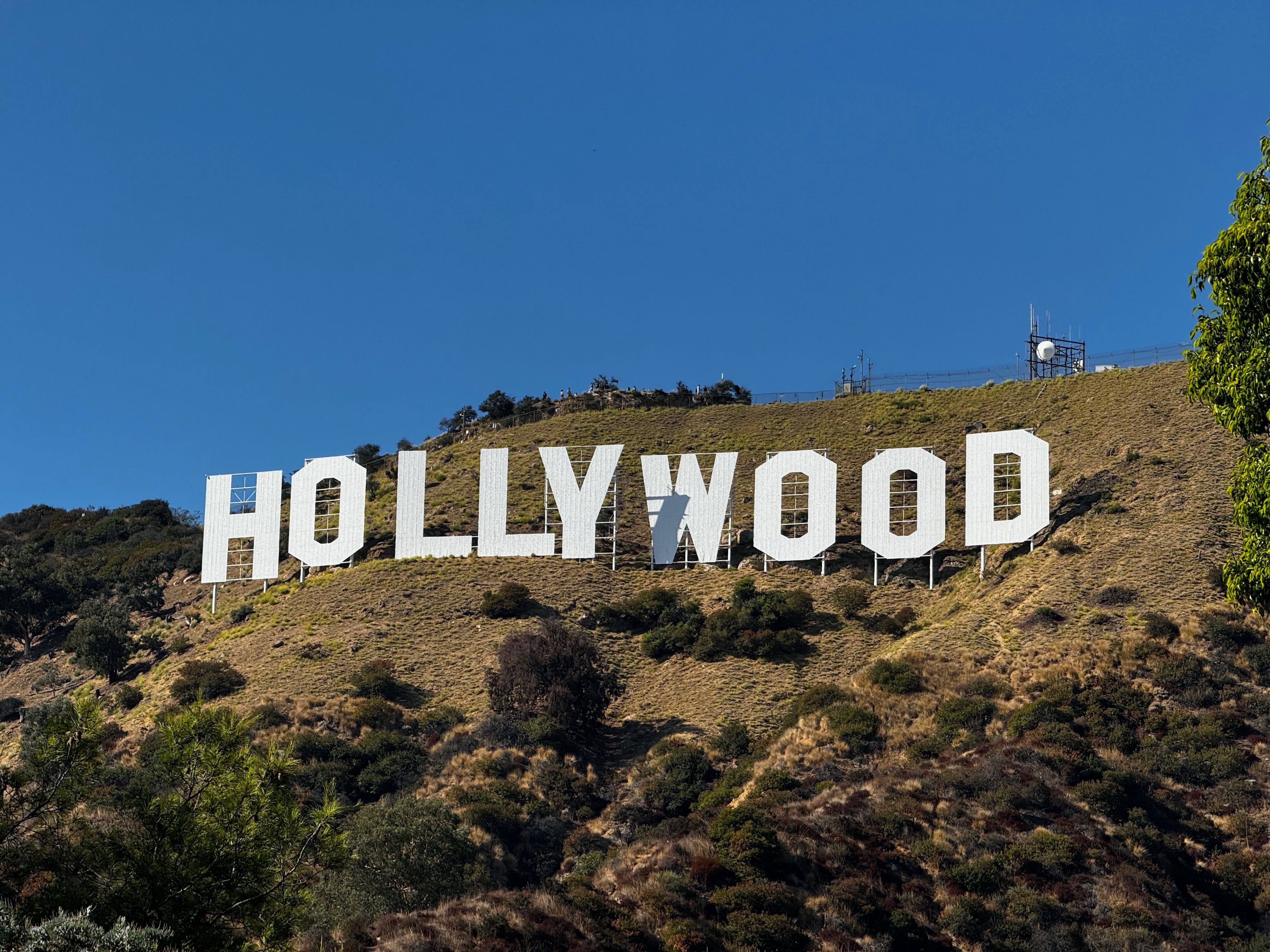
No, no, no. Please. AI will not kill Hollywood
It’s not hard to find uninformed opinions on the Internet. In social media, the newsfeed delivers them, unsolicited, with algorithmic certainty.
Each time I open Instagram, I encounter another post proclaiming “Hollywood is so dead.” The accompanying evidence is usually a short AI-generated clip: a fake movie trailer for what looks like a cliché-riddled dystopian sci-fi world populated by grotesqueries in baroquely-detailed settings.
And I think, “Hang on, this is supposed to kill Hollywood?”
Don’t get me wrong. I enjoy AI generated movies. But this stuff poses no threat to Hollywood.
The claim that an AI-generated trailer heralds “The Death of Hollywood” reveals a lot more about the person who says it than it does about the motion picture industry.
A movie trailer is trivially easy to make. A trailer consists of a random collection of shots cut into a montage for maximum shock value. No matching action. No reverse angles. No continuity from scene to scene. No sustained narrative. Little or no dialogue. No characters that fans care about. None of the things, in other words, that make a film worth watching — or worth making.
When someone posts a fake AI trailer and announces that this will kill Hollywood, they expose a specific kind of ignorance. Ignorance about the primacy of storytelling. Ignorance about what a motion picture actually is. And most relevantly: ignorance about what Hollywood actually is.
Hollywood is not a film, a show, or any particular product. Hollywood is not even a business, in the conventional sense.
Hollywood is a network of networks, similar to Silicon Valley, but entwined in the creative industries. Networks of professionals with deep craft skills who trust each other to deliver with competence. Networks of creative patterns, genre conventions, and archival lore that was accumulated over a century of storytelling. Networks of financing, production infrastructure, and global distribution relationships that took generations to build. Networks of specialized companies that work together only for the duration of a film project, then dynamically reorganize for the next production.
Artificial intelligence is unlikely to unravel those deep networks. It is more likely to infuse them with new energy and to reconfigure them in ways that will help the Hollywood system survive whatever is coming, as it has survived everything that came before.
At the deepest level, Hollywood is about money. Not art.
That’s the kind of sweeping generalization that puts me in hot water with some readers, so allow me to clarify. There’s plenty of artistry in the motion picture business. The best narrative storytellers in the world are members of the Writers Guild. Cinematographers and directors have refined photography into the highest visual art form, with every pixel scrutinized for quality by dozens of expert eyes. Screen acting is a discipline with its own exquisite refinements of scale and intimacy that are distinct from every other performing tradition. VFX, at its highest level, is specialized graphic art applied with obsessive craft to create impossible shots.
But mainly, this is a money town. And money tends to flow where it is treated best. Which is why I have every expectation that the heads of production at the studios will eventually figure out how to incorporate generative AI into the workflow and extract significant economic benefit from it. That is what they do best.
19 years ago, my boss at Sony Pictures said it to me directly, on my third day working on the lot: “This is a movie studio. We don’t make art. We make money.”
He was right. And that insight is the key to understanding why Hollywood will not be killed by generative AI.
The Long, Phony History of Hollywood’s Death Foretold
Television was supposed to kill the movies. It didn’t. The studios licensed their movies to television, extracting profit from the new medium. Then the studios moved into television production. Soon they became the dominant suppliers of television programs. Then they merged with the broadcast networks. Eventually the TV side of the business accounted for most of the revenue and nearly all of the profit in the merged entites.
Cable was supposed to kill broadcast. That didn’t happen, either. Retransmission fees from cable added to the broadcaster’s pile of profit. Easy money. The media giants built or acquired cable channels, which generated another geyser of money. It was nice while it lasted.
Home video was supposed to kill theatrical exhibition. Jack Valenti famously compared home video to the Boston Strangler. That was ludicrous hyperbole. Home video became the most profitable revenue window in the history of the industry, adding billions to the coffers of the studios. Again, nice while it lasted.
Then the internet was supposed to disintermediate everyone. The studios eventually built streaming services — late, expensively, chaotically, not very profitably — but they are still in the game.
The historical record shows us that Hollywood can survive anything you can throw at it. If a nuclear bomb were dropped on Los Angeles, the surviving cockroaches would soon be pitching stories to each other and negotiating housekeeping deals.
The same six companies, in different configurations and under different management, have been in continuous operation for more than a century. They have survived every technology that was supposed to destroy them.
They did not survive by being loyal to any particular format or distribution method. They survived by being loyal the proposition that there is money to be made from organizing the creative process at scale.
Silent films, talkies, westerns, musicals, children’s cartoons, prestige television, reality TV, dark antiheroes, romantic comedies, franchise superhero films: whatever kind of story is selling is the business of Hollywood.
The product changes constantly. The infrastructure for monetization persists.
The studios are the investment banks of the creative process. Like all good investment banks, they are masters of risk mitigation, relationship maintenance, and the rapid redeployment of capital toward whatever is generating returns.
And like Harry Houdini, studio chieftains are adept at finding a way out of any trap.
Artificial Intelligence is not a threat. But human stupidity is.
The argument that “Hollywood always survives” can foster complacency. That’s a risk. The real threats to Hollywood rarely come from technology. They come from human stupidity and short-term thinking.
The list of examples is long. For instance:
The failure to acquire Netflix when it was cheap and vulnerable. TimeWarner/HBO passed on it twice, at valuations that look almost incomprehensibly small against Netflix’s current market capitalization that hovers around $400 billion. (Contrast that to the current $67 billion market cap for WarnerBros Discovery).
The systematic failure to embrace streaming when early adoption would have been cheap and the audience was still forming habits.
The hasty abandonment of cable television, arguably the most profitable and stable business model ever devised, in a panicked, undisciplined rush to compete with streaming platforms long after they scaled to global proportions.
The wave of mergers and acquisitions that enriched a small number of executives while destroying enormous amounts of shareholder value and creative institutional knowledge.
None of these failures can be attributed to artificial intelligence. They were the consequence of human stupidity, the byproduct of human beings making bad decisions, mostly in service of short-term financial engineering, while the long-term strategic position of their companies eroded.
I say this not to relitigate the past but to calibrate the future. The question is whether the people running Hollywood will make the same category of mistake with AI that they made with streaming: recognizing the transformation too late, responding too timidly, and then spending the next decade paying an enormous premium to catch up with competitors who moved while they deliberated.
The New Geography of Success
For the major media companies, generative AI represents a once-in-a-generation opportunity to reinvent a tired business model. This outcome will not be achieved without pain, and it will not please everyone.
What may be different this time is the magnitude of the reconfiguration.
This is not a story about buying a new distribution pipe or producing for a different screen. It is a story about who gets to be inside Hollywood at all.
Generative AI will redistribute success so radically that it will reconfigure the very geography of the motion picture business. The conceptual map of Hollywood, which has always been centered on a few studio lots in Los Angeles and a tightly managed set of relationships between studios, guilds, agencies, and distributors, is about to expand dramatically across the globe.
Creators in regions far away are coming for Hollywood. Well, not for Hollywood, exactly, but for the big pile of cash that Hollywood extracts from their nations. These creators will come from the other side of the planet and from the southern hemisphere. They are experts at making stories for underserved audiences whom the studios have never tried very hard to reach. Soon they will generate new streaming video series at such a low cost that it will make the current studio infrastructure look like an expensive relic.
Those creators are coming, powered by AI.
Will Hollywood incorporate them or be overtaken by them? Let’s break this down.
GenAI will reconfigure the production methodology
People in Hollywood have blind spots. Here’s a huge one: the movie stars, celebrity talent, managers, agents and studio heads tend to read their own press.
That’s how they end up believing their own mythology.
That habit will not serve them well in the transition to generative AI. Humility and clear-eyed self-awareness are needed to navigate this change. What you think is important today might not be important in the context of AI.
Example: plenty of people in movies and television still operate under the assumption that actors standing on a soundstage in front of a camera represent the pinnacle of artistic expression in cinema.
That’s a blind spot. The less-flattering truth is that, today, live action footage serves as the raw material for animation. Most major feature films use the live action footage as the starting point for a product that will ultimately consist of computer-generated imagery. AI will turbocharge that trend.
Animation has devoured live action. And generative AI will devour animation.
“Live action” is now a marketing category. The production reality is already synthetic.
Generative AI introduces a third method of filmmaking that will commoditize computer-generated imagery. No camera. No animator. Instead, video is inferred directly from text descriptions or reference images. The frames are not captured in camera nor are they drawn. They are synthesized by a model that has internalized the statistical structure of visual reality from exposure to vast quantities of existing imagery.
This is not an incremental improvement on the previous methods. It is a new category of filmmaking, the first genuinely new way to make a motion picture since the Lumière brothers pointed a camera at a train pulling into a station in La Ciotat in 1895.
This novel third option will render the traditional production process obsolete, and it will reduce costs so much that it will remove barriers to entry, opening up a flood of competition. Most of that new competition will come from unexpected directions.
As a manufacturer of content, Hollywood is optimized on an outdated model. That’s a weakness.
The 20th-century assembly-line production model that still governs Hollywood filmmaking hasn’t changed much in 100 years. The steps of story development, pre-production, principal photography, post-production still occur in strict linear sequence with most of the creative decisions locked at each stage.
This sequential left-to-right industrial process is unlikely to survive intact during the transition to the iterative cyclic workflow made possible by generative AI. That doesn’t represent a loss, however: it may be a big improvement.
In the standard production model, the cone of creative possibility gets narrower and narrower as the project moves through the process. Decisions made early in the process tend to constrain everything that follows. At the end of the line, the first people who see the nearly-finished film as a whole, including the editors, the mixers, the VFX artists in post-production, are paradoxically in the best position to rescue a failed film and yet they are the least empowered to make a change. Their deep talent is squandered on pixel-twiddling a bad film marred by a lame script or a story flaw or poor casting decision. That waste is the unavoidable byproduct of an outdated industrial process.
Generative AI will fix this defect by inverting the process. With generative AI, the cone of possibility expands as production proceeds. Scenes can be iterated endlessly. Characters can be replaced late in the process. Settings can be swapped after the story is locked.
What was once an irreversible sequence of locked decisions will soon become a fluid, non-destructive workflow in which every creative option remains on the table until the moment of release.
What makes this inversion likely (inevitable, in my view) is the breathtaking reduction of cost.
McKinsey recently interviewed dozens of studio executives, creative talent, and AI technologists about this transition. Their finding: industry leaders expect efficiency gains of 80 to 90 percent in VFX and 3D asset creation. That may be a conservative estimate.
The cost of generating a minute of TV-quality video with artificial intelligence has been falling steadily from approximately $2,000 18 months ago to approximately $1,000 today. (My figures are estimates because everyone has a different workflow, and a different definition of acceptable output. My estimates of cost tend to range on the higher side because I am concerned with TV quality).
My colleagues at Nura Studios estimate they can reduce that figure below $100 per minute before 2028. That is a big deal.
Compare that to the current average cost of making a major theatrical feature: approximately one million dollars per minute.
That’s a cost decrease of five orders of magnitude in less than five years.
With economics like that, a studio can produce and test multiple versions of a scene and iterate their way to the final version, incorporating audience feedback at each step in the process. Iterative workflows will ensure that more film and TV projects have already been optimized for appeal before they are released. This is not only about cost savings: it’s about ensuring product-market fit before the film is finished.
Some studios are not waiting to find out what happens. They are beginning to make it happen right now.
Amazon MGM Studios has already moved from experimentation to integration. Season 2 of House of David, the studio’s biblical epic, incorporated roughly 350 AI-generated shots across the season, using these tools for scenes that would have required either extensive traditional VFX work or logistically difficult on-set solutions. The scale of that integration signals that Amazon now treats AI as a standard part of production. By early 2026, the studio had launched a closed beta of AI production tools targeting character consistency, pre-production, and VFX pipelines across its broader content slate.
Netflix has adopted a similar approach, applying generative AI where it makes sense today, with a plan to expand as the tools improve.
This is what adaptation looks like in the early stages. Begin by applying AI where it delivers tangible benefit today, then gradually expand from that beachhead into adjacent steps in the process. We saw the exact same pattern occur with the transition from analog production to digital. One step at a time.
This time, the audience is way ahead of Hollywood
What makes this overhaul urgent is the fact that the big media companies need to catch up with their audience.
The audience for video entertainment has already moved en masse. Not toward AI-generated content specifically, rather, towards something that serves them better than premium media currently does. AI will simply accelerate this trend.
To illustrate, let’s consider what happened in the living room since 2010. Now, three or four screens compete for attention simultaneously: the television, the tablet, the laptop, the smartphone. Most people who watch television have a smartphone in their hands, or at hand.
The television is the second screen. The first screen is the smartphone. That’s the screen that grabs primary attention, the screen that is consulted first and abandoned last, and the screen that you always have with you.
This outcome is already locked in. What we are watching now are the lagging consequences catching up to a behavioral shift that happened years ago.
The numbers make this point unambiguously clear. Video services that are optimized for the smartphone, including social video like YouTube, TikTok, and Instagram Reels, are growing. They now account for approximately one quarter of all video consumed in the United States.
YouTube’s share of total video viewing on television sets alone has grown more than 50% in the past two years. It now commands roughly the same viewing share as Disney+, Hulu, Max, Peacock, and Paramount+ combined.
When time spent on social media and creator content increases, attention is subtracted from major media productions. In 2019, TV and film accounted for 61% of all video consumption in the US. But today that number is 50% and falling, as the average American adult spends nearly seven hours a day watching video across platforms.
Creator content isn’t “low quality.” It is “high relevance.”
The conventional response to this data from incumbent media companies is denial, bolstered by a stale argument about quality. According to this reasoning, the content that is stealing share is “low-quality”, and also that the phenomenon is temporary.
The presumption: audiences will eventually tire of “low quality” creator fare and return to premium content. This sort of magical thinking has been the standard response to creator content for more than a decade. CBS and NBC executives told me this exact same story when I led the digital business for Oprah Winfrey in 2010. They were wrong then, and they are even more wrong today.
Doug Shapiro, whose forthcoming book Infinite Content from MIT Press offers the most rigorous analysis of this transformation, frames it in a way that makes the denial position untenable. I am going to cite Doug here, because he has produced the sharpest analysis of this phenomenon.
Quality, Shapiro argues, is not a value judgment. Quality is revealed preference.
Quality is not what consumers say they prefer, it is what they actually choose to consume. When someone flops onto the couch after a long day and scrolls Reels for twenty minutes instead of reaching for the TV remote that is an arm’s length away, they are revealing the undeniable truth: in that moment, Reels is higher quality than anything on Netflix. Not technically. Perhaps not by any traditional measure of production value. But by the only measure that ultimately matters: the choice they made with their limited attention.
The shift in consumption pattern reveals a shift in the attributes that define quality in media. Authentic. Relatable. Relevant to me. Reflects my community. Easy to find. Low friction. Digestible. These now rival and in the most-consumed media formats, consistently outweigh, the more traditional markers: recognizable or bankable movie stars, elaborate visual effects, prestige showrunners, cinematic cinematography.
YouTube surveyed 12,000 viewers about why they watch what they watch. Almost all of them said quality was determined by both technical and emotional factors. The emotional markers, such as “is authentic and relatable,” “is relevant to my interests,” “creates a sense of belonging”, were cited nearly universally.
A BCG study of Gen Z viewers found that 76% believe short-form platforms are better than streaming services at hosting creators who “reflect me.” 65% say short-form is better at helping them find content they like.
The studios cannot solve this by making better versions of what they already make. Generative AI is about to give an enormous number of new creators the tools to provide what the audience is actually asking for.
Hollywood is being confronted by a major shift. The studios will either get ahead of that wave or get caught underneath it.
The Geopolitical Flip
Because the most powerful people in the media industry tend to operate with a blind spot that allows them to believe their opinions about quality matter more than the audience’s, a dark secret goes unmentioned.
Hollywood’s dominance of global film and television was never primarily about creative talent. The talent was real, genuinely world-class across every discipline, but star talent was not the foundation of dominance. That was the packaging, the glitz.
The foundation was a production cost and scale advantage, made possible by control of distribution infrastructure, that guaranteed in most international markets a near-monopoly on premium content. The talent was just expensive window dressing.
Both pillars of dominance are now dissolving simultaneously.
When a creative team of twelve people in Seoul, Lagos, Kuala Lumpur, or São Paulo can produce a television-quality scripted series for the cost of a moderately priced automobile, the notion that American studios will retain the production cost advantage is simply false.
That advantage was always merely overhead on the problem of producing frames of film. Generative AI eliminates that overhead everywhere. Not just in Los Angeles. The geographic advantage is not longer durable. Every place that has electricity, an internet connection, and a story worth telling will be an extension of Hollywood. Or a rival.
The distribution monopoly was already broken by streaming. Netflix and YouTube demonstrated that you do not need theatrical exhibition agreements or broadcast licenses to reach a global audience at scale.
The next wave of disruption does not even need Netflix. It needs a smartphone and a social platform. Both are present in every market on earth, and the audiences in those markets are already there, already engaged, already forming preferences that the Hollywood studio system has never tried to serve.
What’s at stake: The US film and television industry is the largest in the world, generating more than $17 billion in content exports annually and running a positive balance of trade in every major market on earth. Altogether, that is $649 billion of a $2.8 trillion global market — roughly 23% of total global M&E revenue.
As recently as 2021, American films routinely captured more than half of total box office receipts in most foreign countries — and in many markets, significantly more, up to 2/3 of box office. No other nation comes close to that level of sustained global dominance in storytelling.
That dominance was built on two structural advantages: the highest production budgets in the world, and the most sophisticated global distribution networks ever assembled. Generative AI will undermine both of those advantages.
Cinematic AI will mature at a critical moment, just as other nations are gearing up to challenge US dominance of film and scripted TV shows. GenAI will contribute decisively to the erosion of American dominance of international film and TV markets.
In 2024, international markets accounted for over 70% of Hollywood's total box office revenue, which illustrates how deeply dependent Hollywood is on foreign audiences. Sure, US films still dominate box offices at home and in Canada, but international receipts have been in decline everywhere from Europe to Asia. In France, US and UK films combined represented only 44.9% of total admissions as recently as 2014. Chinese productions have netted 20% of the global box office on average in the five years since 2020, double the 10% they earned in the five preceding years, when almost all earnings came from China's domestic market. And in 2020, China overtook North America as the world's largest box office market for the first time.
International upstarts want to grab their share of the $17 billion in content exports annually earned by the US film and television industry. American entertainment products now face growing competition from domestic productions in China, India, and South Korea. These are markets that have developed strong local industries capable of competing for their own audiences, and they have turned their attention to the global market.
In my own international work, I learned from firsthand experience that M&E professionals in the nations in Southeast Asia, including Philippines, Indonesia, Singapore, Taiwan, and Thailand, are keenly aware of the remarkable success in enjoyed by the Northeast Asian nations like Japan, China, Korea. The Asian Tiger Cubs see that the Tigers have cracked the code on international distribution. They are hungry to emulate that success.
Producers in Southeast Asia and other areas in the Global South see generative AI as their best chance to steal international market share from the USA.
How might this occur? The mechanism of this reversal starts with a concept worth understanding in detail, because it is the specific sequence by which the transformation will unfold. I have written about it before as hyper-localization.
How GenAI will open the floodgate to hyper-localized content
Language localization is where the disruption will begin, because that is the first place where the economic argument becomes undeniable. Dubbing a major film into a second language currently costs millions of dollars and takes months, and yet the final product sucks. Nobody loves a dubbed or subtitled show. Dubbing is a necessary evil.
Major studios typically localize their worldwide releases into twenty to thirty languages (or fewer), which means the vast majority of the world’s 7000+ languages and regional dialects receive no version at all. That’s a missed opportunity.
AI will reduce the cost of language localization by orders of magnitude and compress the timeline from months to days. The result: stars speaking perfect Hindi, Russian, Spanish, and Mandarin — not with dubbed voices, but with their own voices, modified by AI to match the phonemes and lip movements of each language.
But language localization is just the entry point. What comes next is the critical implication that has not yet entered the mainstream industry conversation.
When AI reprocesses every frame containing a speaking actor for language localization purposes, it touches every frame of the film. That’s when the barrier to the next step — visual localization — evaporates.
Once the editors and VFX specialists begin to modify an actor’s faces to match the lip flap with local dialog, why stop there? Why not replace the cars in the background with cars familiar to that market? Replace the storefronts with signage in the local language. Replace the skyline with the city where the audience lives.
GenAI will be a bonanza for product placement, creating new time-based windows for ultra-local advertising. The can of Coca-Cola will become Pocari Sweat for Japan, Mirinda for the Middle East, Gazoza for the Balkans. Product placement, tailored per nation, per release, at near-zero marginal cost. But that’s not all.
Next: why not replace some of the actors? Start with the extras and background performers. Then the supporting roles. They will be replaced by synthetic performers who look native to each market, who speak the local language with native fluency, who reflect the audience watching them in a way that a cast assembled in Los Angeles never has and never could.
Language localization is the thin end of a wedge that will eventually pry open space for the complete transformation of global cinema and TV: not just the content but also the distribution pattern.
It is a two-way street. Using the AI tools, local content made in other nations can also be cheaply retooled for the North America market. That makes the US a target for imports.
What this does to the competitive map.
By the end of this decade, every major film may potentially exist in hundreds of languages and dialects and visual variants, each localized for specific markets at near-zero marginal cost.
And simultaneously: creators in Manila, Jakarta, Singapore, or Bangkok will use GenAI to build content that is visually and linguistically native to local audiences from the first frame, at a fraction of the cost.
Creator content made with AI will not suffer from the structural disadvantages that made it difficult for local films to compete against the output of the major studios in Burbank, Studio City, and Culver City. The AI production tools will cost the same. The distribution infrastructure will rely on the same social platforms to reach those audiences. The localization question doesn’t arise, because the work will already be native. And these creators can use AI tools to localize their films and shows for audiences in other nations. They will compete on more equal footing.
South Korea already demonstrated what is possible within the existing production cost structure. Parasite won the Academy Award for Best Picture. Squid Game became the most-watched series in Netflix history. A wave of subsequent Korean exports has achieved genuine global cultural dominance in film, television, and music simultaneously without the backing of a single American studio.
That South Korean success was accomplished within the old cost structure. Now imagine what Korean, Nigerian, Brazilian, and Indian creators will do when the production cost structure collapses by 90% or more.
Power and revenue will shift, not to one new place, but outward, dispersed away from the concentrated infrastructure of Los Angeles and toward whoever can produce compelling stories most efficiently and distribute them most directly to the audiences who want them.
The easy dominance over global myth-making enjoyed by American media companies in various forms since the 1950s will come to an end. Not because American stories got worse but because the tools got cheap enough to allow other voices to be heard. What will replace it? My guess is that we will see ferocious competition from every nation with an underserved audience and a hunger for global distribution.
Who wins in this scenario?
The redistribution of success in the AI era will not produce one winner. It will produce a new topology. That is, a different shape of the industry, with different peaks and valleys than the one we currently inhabit.
Here are five scenarios that convey how I expect this to unfold.
One: The major studios adapt and survive, but smaller, and dispersed across the globe.
The studios will not disappear. Their franchise IP, global marketing infrastructure, talent relationships, and theatrical distribution networks represent genuine, durable advantages that AI cannot replicate at scale.
What I think will likely change is their function. The studio of 2035 will look less like a factory that manufactures content and more like a curator, certifier, aggregator, and financier of content: an investment bank with a global brand, deploying capital against stories and creators rather than against physical production infrastructure. Think deals, not reels.
Two: A new creator class is already here.
45 million people in the United States now identify as professional content creators. Globally, that figure exceeds 200 million. The fastest-growing segment within that number is not Gen Z influencers: it is executives and founders, what analysts are calling the creator middle class: professionals who have adopted content creation as a core part of how they build businesses and reputations.
The commercial incentive driving this is concrete. 77% of B2B buyers say they are more likely to purchase from a company whose executives are active on social media. The creator who currently makes authoritative business content on LinkedIn will soon begin to make authoritative short-form dramas on the same platform, with the same production values, at a cost that makes the current studio infrastructure look like an expensive anachronism.
When hundreds of millions of professional creators gain access to AI tools capable of generating cinematic-quality content, some will raise their game. Watch for coherent narrative, consistent characters, richer sound design, photorealistic environments.
Can low cost regional creators upskill to professional storytelling faster than the big media giants can retool with AI? That’s a race worth winning.
When this happens, the distinction between “creator economy content” and “Hollywood content” will dissolve. Not immediately. But on a timeline measured in years, not decades.
Three: New geographic centers of storytelling will emerge at scale.
South Korea proved this can be accomplished within the existing cost structure. Nigerians, Brazilians, Indians, Indonesians, Israelis, the Nordics and dozens of other regional creative communities will prove it again, faster and at larger scale, with the advantage of low-cost AI tools. The stories they tell will be native to their audiences in ways that American productions have never been and can never be. Not because American storytellers lack empathy, but because dubbing and subtitling, however sophisticated, doesn’t feel natural. The genuine article is always more powerful.
It is notoriously difficult to predict emergent effects and second-order consequences of new technologies, but I’ll take a stab at it. I envision that a new network of regional content localization alliances will arise.
I imagine that GenAI will make it possible for a group of creators in one nation or language region to strike partnership deals directly with creators in other regions: they will swap content assets and creative control, allowing their partners on the ground in other nations to adapt the story to suit local preferences, social norms, and humor. This exchange will be subject to some form of creative approval and revenue sharing.
So, for instance, a group of creators in Sao Paolo might partner with creators in the Gulf region, or the Subcontinent, or Southeast Asia, to adapt their stories, characters, dialog and plot lines for success in those markets.
In some ways, this might resemble the format licensing business in international TV today, but without the need to re-shoot the entire series with local actors. Instead, the original source files, turbocharged by GenAI tools and reusable assets, will be localized and published in TV-quality for audiences in every nation across the globe.
Can Hollywood play a role as global matchmaker? Why not? That kind of deal swinging is part of this town’s DNA. A more ambitious studio might pick up the international rights to a trending series and arbitrage those localization right across multiple regions. If Hollywood does not do this, then someone else will.
Four: The below-the-line workforce will fracture, and some will become the disruptors.
The tens of thousands of production workers currently being displaced from Hollywood studios by a combination of runaway production, AI automation, and the general contraction of the industry are not simply casualties of the transition. Some of them will become its protagonists.
The workers formerly known as below-the-line have spent their careers acquiring deep craft knowledge of what makes a scene work. They know what makes a cut pay off, what makes a performance feel true, how sound design can create emotion without calling attention to itself. Give those people AI tools, a laptop, and subtract the friction imposed by the studio’s approval process, and some of them will make extraordinary things. The below-the-line workforce displaced today may emerge as the disruptors of 2028 wielding AI to make their own shows.
Five: Power law dynamics intensify — and the middle gets crushed.
As AI floods the market with content, the distribution of success will become more extreme. Shapiro documents this carefully: the creator economy already operates on a distribution closer to 1/99 than the traditional media industry’s approximately 20/80 Pareto distribution. Fewer than 1% of creators capture 99% of the revenue and attention.
As production costs collapse and the volume of content explodes, those power law dynamics will intensify further. The hits will be bigger. The tail will grow longer. And the middle, meaning the mid-budget film, the second-tier streaming series, the working writer with a solid professional career but no franchise, will endure the most serious pressure.
We’ve seen barbell economics play out across the economy since the pandemic, so this scenario seems awfully likely to transpire.
The Choice Ahead
Let’s return to where we began.
Hollywood will not be killed by generative AI. A century of evidence about this industry’s survival instincts makes that conclusion nearly certain.
The network of networks — the financing relationships, the distribution infrastructure, the accumulated craft knowledge, the institutional capacity for managing creative risk at scale — that network will persist. It will adapt. It will eventually find a way to extract profit from the new tools, as it has extracted profit from every new tool before them.
But survival is not the same as continuity. And the Hollywood that survives the AI transition will look different from the one that exists today. Smaller in headcount. Broader in geographic reach. More dependent on IP and brand and marketing and less dependent on the physical apparatus of production that has defined the industry for a century.
The more interesting question is not whether Hollywood survives. It is what Hollywood becomes and who gets to be part of it.
The creator in Lagos or Mumbai or Taipei with a laptop, an AI toolkit, and a story that resonates with a billion people the studios have never really tried to reach is not Hollywood’s enemy. That creator is Hollywood’s future. Whether Hollywood knows it yet or not.
The studios that figure this out first will survive. Those that stop thinking of the lot as the boundary of the industry and start thinking of the entire planet as their development playground, those are the studios that will still be around in 2050, still doing what they have always done: organizing the creative process profitably and building franchises, regardless of what the product is or where it comes from.
Those who waste time on the debate about whether generative AI is a threat to their current business model will discover, as their predecessors did with streaming, that the window to define the future closes a lot faster than anyone expects. The big mistake is failing to move when the prediction becomes obvious.
The fake AI trailer on Instagram is not killing Hollywood. Nobody in Hollywood is worried about the fake AI trailer on Instagram.
What Hollywood should be thinking about is the story behind the trailer. The creator who made it. Where they live. What they have to say. Whether their local audience wants to see the entire film. Whether the local audience will contribute to crowd-funding or crowd-marketing the final product. If that audience can be enlisted to test early versions of the story until it is perfect.
Generative AI technology is in its infancy. What will these creators be able to make in three years with tools that don’t exist yet? That is the future of Hollywood, if Hollywood wants it.
That creator, and hundreds of millions more like them, are the real story of generative AI.
AI won’t kill Hollywood. But myopia and human stupidity might.
Author note: for years, I have enjoyed reading the work of Doug Shapiro, who consistently provides the most clear-eyed and accurate analysis of the strategic trends that will shape the future of media and entertainment. His book, Infinite Content, will soon be published by MIT Press. I strongly recommend it to you. Read the first part of Infinite Content here. You can listen to my interview with Doug here at The Futurists Podcast.
I read your captivating article having also listened to you with great interest when you spoke at METAL.
Great things can, and will be made with AI providing scintillating human ideas and talent will use its incredible capabilities skillfully.
Great piece. I think it will be a combination of 1 and 4. Studios budgets will focus on marketing and distribution. With the glut of content produced, the ones with the money to get mass awareness campaigns will still have an advantage. Having done multiple AI projects, having a strong graphics person, and a great editor are essential, which are below the line currently but have higher importance in AI workflows.