

During the past 25 years, film was gradually absorbed by animation. Today computer-generated animation is applied to nearly every major motion picture. Soon, animation will become a subset of artificial intelligence. This is not a prediction. It is already happening. The process is irresistible, for one reason above all others: the economics of myth-making.
The TL;DR Version
For 100 years there were two ways to make a motion picture. You could point a camera at the physical world and capture live action on film— actors, sets, light, action. Or you could compose images by hand, one frame at a time — drawings, stop-motion models, painted cels, among many other techniques — and photograph them in sequence to simulate motion.
These two methods formed the foundation of two discrete industries with distinct aesthetics, distinct workforces, and distinct audiences.
That categorical distinction no longer exists. Film has become a subset of animation. And with the advent of generative AI, a third method of image-making has arrived that renders the question of “live action versus animation” essentially obsolete.
Here’s my argument in brief. For the reasoning that supports these claims, please read the sections that follow.
First: the line between live action and animation dissolved during the past two decades. The majority of major motion pictures now contain thousands of synthetic frames — not just for monsters and spaceships, but for ordinary scenes in contemporary settings. CGI is invisible, pervasive, and normalized. “Live action” is now a marketing category for major feature films, not the production reality.
Second: a novel method of making motion pictures has emerged. Artificial intelligence requires no camera and no animator. It generates video directly from text or image prompts. This is not an incremental improvement on existing methods. It is a categorical addition — the first genuinely new way to make a film since the 1890s.
Third: AI will subsume both previous methods, not necessarily through artistic superiority but through cost. The cost reduction will range between 100x to 1000x. At that magnitude, resistance is not a strategy. It is an attempt to delay the inevitable.
There is no debate about whether this will occur. It is already happening. The only question is what filmmakers will do with the creative freedom made possible by the collapse of production costs.
Some folks in the film industry resist these trends because they fear for their jobs, but it seems likely that the collapse of cost will create more opportunities than it destroys. We stand at the threshold of the greatest gateway to expanded human creative expression. Why? Because generative AI will make it possible for millions of people to produce a film without a camera, crew, cast or soundstage. Those relics of the outdated 20th century production process will soon be optional for AI filmmakers.
About Outrage
Before I proceed with the argument, I must share a comment about outrage, because some readers will need it.
Some folks have responded to my recent articles with anger and personal attacks. Outrage is a cheap emotion. This is why manufactured indignation is commercially durable in social media and cable TV talk shows.
Forward-looking statements about technology in an old industry reliably trigger it. Outrage feels good because it satisfies the human craving for significance, particularly at a time when new technology threatens to upend careers and devalue the skills gained in a lifetime of craft.
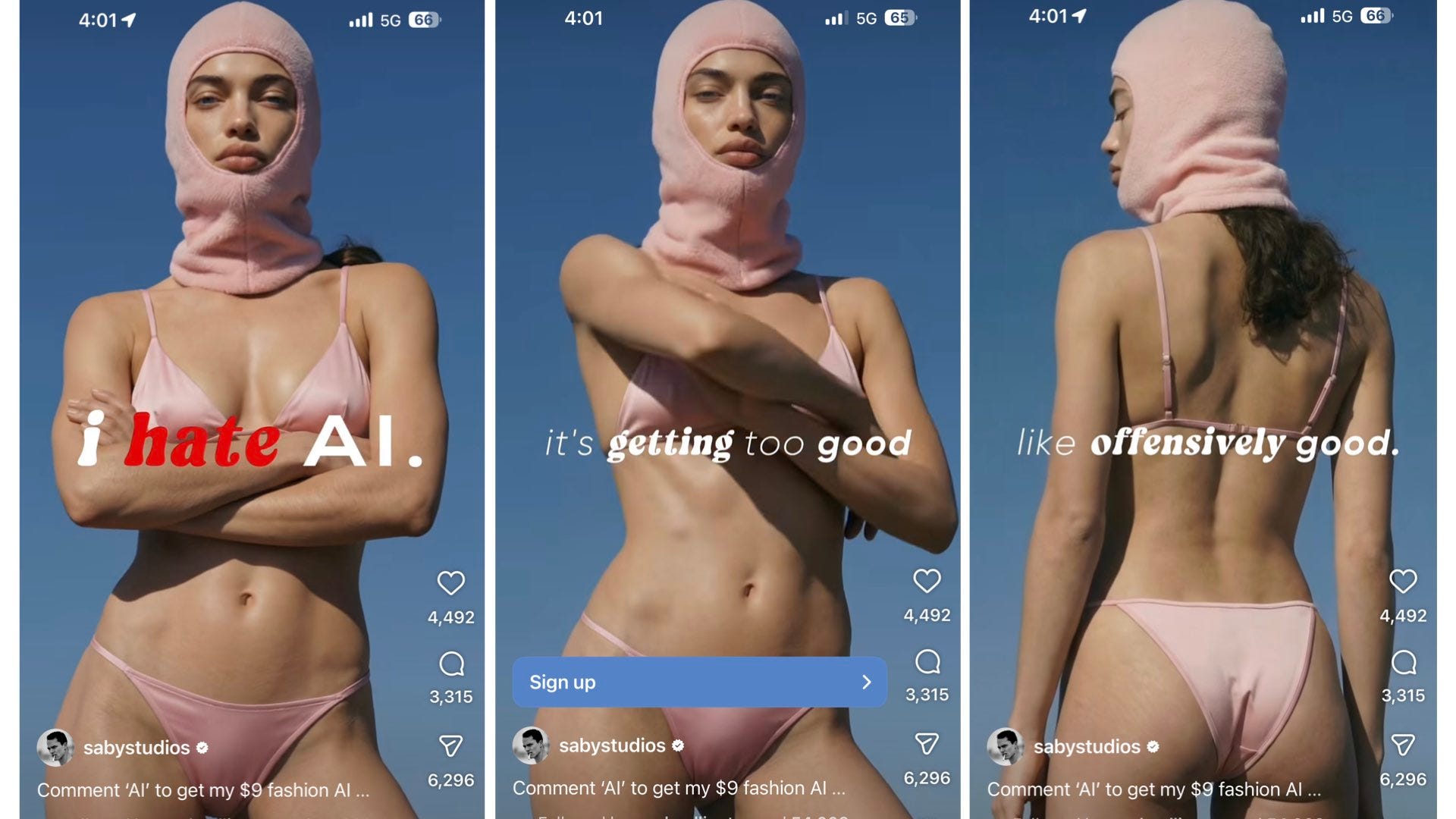
I have already heard from angry filmmakers, surly post-production technicians, and grumpy VFX experts about my previous articles in this series. Their arguments can be summarized as: “I prefer the old method for reasons.” I take those reasons seriously. Tradition, craft, and artistry are genuine values that I share.
But aesthetic preference is not an argument against economics, and the distinction between artistic choice and economic necessity is exactly what this piece is about.
At the same time, a growing number of creative professionals in the film and TV industry have contacted me privately to say they find my writing useful and inspiring. My recent presentations to the motion picture professionals and my articles have encouraged them to experiment with AI tools without waiting for institutional permission.
The people who approach me in private are members of the professional talent guilds; they face meaningful peer pressure to maintain solidarity as the guilds finalize negotiations with the producers and studios in the AMPTP. Artificial intelligence remains a contentious deal point in those negotiations. Use of AI has been discouraged among the guilds.
Despite that pressure, a rising generation of creative artists and storytellers has begun to experiment with AI tools. Those who have reached out to me believe they must remain anonymous, which tells you something about the current state of the conversation.
To them, and to all readers, I say: it’s time to step out of the AI closet.
Be proud of your experiments. Show your progress as you ascend the learning curve. Don’t hesitate to tell the world that you are mastering generative AI. These tools exist, they can be very useful for creative work, and they are not going away, regardless of whatever the forces fighting the future may claim. Your willingness to use generative AI may lead to your next job.
* * *
One Hundred Years, Two Methods
Cinema is older than the studio system, older than Hollywood, older than the first feature film. Its two founding methods were established almost simultaneously in the 1890s, after decades of experimentation: the Lumière brothers pointed their camera at quotidian scenes from real life; Georges Méliès constructed fantastic images through illusion, editing, and proto-animation.
For a century, these methods remained categorically distinct. Animation was a separate industry — Disney features, Looney Tunes shorts, Japanese anime — made by entirely different processes and consumed by different audiences. Occasionally they intersected: Gene Kelly dancing with Jerry Mouse in Anchors Aweigh (1945), the stop motion scenes by Harry Harryhausen in Jason and the Argonauts (1963), certain 70s and 80s-era James Bond films that used miniature models animated by the artists that made the Thunderbirds series, and the Ink & Paint Club in Who Framed Roger Rabbit (1988). But these were exceptions.
How Animation Devoured Live Action
The Wikipedia list of films that combine live action and animation charts the progression from novelty to standard operating procedure. Through the 1920s, 1930s, 1940s, and 1950s, hybrid live action/animation films were relatively sparse, just a handful of films per decade. The list begins to expand greatly in the 1980s.
Then the 1990s arrive, and the nature of the list changes entirely. Hybrid production is now the norm, no longer an exception or a novelty.
[Author’s note: The Wikipedia list tracks “hybrid films” in which animated characters visibly interact with live actors. This methodology dramatically understates the actual prevalence of synthetic imagery in contemporary film, since most CGI in modern productions is invisible to the audience. The true number of films containing synthetic imagery is now effectively all major releases.]
The inflection point was not Who Framed Roger Rabbit, though that film demonstrated extraordinary technical sophistication. Some folks claim the inflection occurred with the dinosaurs in Jurassic Park in 1993. Others say it was the action sequences in The Matrix in 1999. Some folks (including me) would argue in favor of Terminator 2: Judgement Day in 1991.
In any case, an important threshold was crossed in the 1990s.
In each of these films, computer-generated imagery played a starring role, whether it was Steven Spielberg’s dinosaurs or James Cameron’s liquid metal Terminator 2.
Those films differed from the films that came before: they used CGI not to add an animated gimmick to a live action film, nor to depict events in some other part of the Galaxy (like Star Wars), but to create story elements in the quotidian world that a camera could not capture. CGI blended the fantastic with the mundane. The synthetic imagery was load-bearing. The story could not exist without it.
By the late 1990s, this novel approach to hybrid filmmaking, blending live action with computer-generated animation, went into hyperdrive. I was a young executive at Sony Pictures when the studio acquired the rights to make the first Spider-Man film in 1998. Meanwhile, on the other end of Motor Avenue, Bryan Singer had already begun production on the first X-Men movie at 20th Century Fox. The first X-Men was released in 2000, followed by Spider-Man in 2002.
Why were these films greenlit in the late 1990s? The timing was no coincidence. Simple answer: the quality of computer-generated imagery was finally good enough to make these classic Marvel superhero stories not just plausible, but believable blockbuster hits with enough verisimilitude to justify the enormous expense of retouching every frame of film.
Fans loved it. X-Men achieved $157 million domestically and $296 million globally, on a budget of about $75 million, one of the top-grossing pictures released in 2000. Spider Man blew past that mark as the highest-grossing film of 2002 in the USA and the 6th highest-grossing film of all time, with $407 million domestically and $822 million globally on a budget of $139 million. This was just the starting point. These benchmarks were soon surpassed by sequels.
By the 2000s, the age of the computer-generated blockbuster had arrived.
The CGI Industrial Complex
The management at Marvel Entertainment made a conscious decision to license their stories to five different studios at the same time: Fox, Sony, Lionsgate, New Line, and Universal. Creative competition spurred the rapid advancement of CGI in storytelling (and I expect the same will occur with generative AI).
By the mid-2000s, making a superhero film was a rite of passage for an entire generation of screen actors, screenwriters and directors. Professional crews grew adept with green screen techniques and effects-laden productions. The number of post-production shops proliferated, each boasting unique expertise gleaned from previous productions.
What followed was the era of superhero films: complex spectacles layering thousands of VFX and CGI shots atop live action foundations. By the late 2000s, a Marvel film might contain 2,000 to 3,000 VFX shots. Avengers: Age of Ultron holds the Hollywood record at just over 3,000. Captain America: Civil War, with twelve separate VFX teams contributing, reached the same threshold.
The sequels to the Spider-Man and X-Men films rank among the top grossing films in history. Today, superhero films occupy more slots on the top 100 grossing films than any other type.
The workflows and methodologies first devised for superhero and sci fi films transformed the entire film industry because they had conditioned audiences around the world to expect breathtaking visual spectacles that are blended seamlessly into everyday scenes of urban life. The same techniques swiftly normalized and were adopted across genres that had nothing to do with superheroes. Period dramas. Historical films. Intimate human dramas. Contemporary romantic comedies.
CGI is now routinely used for background replacement, crowd extension, location augmentation, weather, de-aging actors, skin retouching, wire removal, vehicle replacement, and dozens of other applications that audiences never notice, because they are not supposed to notice.
These are no longer Spielberg’s dinosaurs or Cameron’s monsters that call attention to themselves with the novelty of their appearance; quite the opposite. These video effects vanish into the verisimilitude of the story.
In the 2020s, CGI is everywhere, normalized into films of all kinds, not just sci-fi and superhero sagas. It is even used for backgrounds, props, costumes, and basic scenes that could be filmed practically. It is now normal in major motion pictures for every frame to be digitally touched.
“Live action” is now a marketing category. The production reality is already synthetic.
* * *
The Tom Cruise Exhibit
No one in contemporary Hollywood has built a personal brand identity more deliberately around the rejection of computer-generated imagery than Tom Cruise. His insistence on performing his own stunts (hanging from aircraft, sprinting across rooftops, skydiving, motorcycle chases without a helmet) is central to his public persona and his commercial proposition to audiences. He is, by his own account, the last defender of authentic physical filmmaking.
In 2015, when asked whether he would return to Top Gun for a sequel, Cruise was unambiguous. “We’ve got to do all the jets practical, no CGI on the jets,” he told Extra. “I’m saying right now: no CGI on the jets.” Director Joseph Kosinski echoed the commitment during production: “You can’t do it on a sound stage, you can’t do it on a blue screen. You can’t do it with visual effects.”
The film that resulted, Top Gun: Maverick (2022), was released to extraordinary acclaim and earned $1.37 billion worldwide. Its aerial sequences — actors genuinely experiencing G-forces in the rear seats of Navy F/A-18 Super Hornets — are remarkable. The practical work was real.
Top Gun: Maverick also contains more than 2,400 visual effects shots.
This was reported by VFX Voice, the trade publication for the visual effects industry. It was not mentioned by the film’s marketing operation. In fact, according to VFX Voice, the visual effects team on Top Gun: Maverick was barred from promoting the film — an extraordinary and revealing detail. The VFX artists whose work constitutes a substantial portion of the finished film were instructed to be silent about it, so as not to complicate the marketing narrative about practical filmmaking.
The F-14 Tomcat that appears in the film’s third act, a central plot point, was no longer in active U.S. service. Production filmed a modern F/A-18 and used CGI to transform it into the older aircraft. The aircraft you see on screen is synthetic. The most visually iconic element of the climax is animation.
This is not a criticism of Top Gun: Maverick, which is generally considered an excellent film. It is Exhibit A in the current state of the art. Tom Cruise, the most committed defender of practical filmmaking in Hollywood, with the budget and the leverage to actually do whatever he says, made a film with over 2,000 VFX shots while publicly claiming otherwise.
The bold posture about live-action purity was marketing. The film itself was, like every other major release of its era, substantially synthetic.
The norm is already animated. Only the rhetoric remains analog.
The Highest-Grossing Films Are Made With CGI.
Consider the top-grossing films of all time. Every film in the top 20 includes substantial computer-generated imagery. And this is true for substantially all of the top 50 films.
Five of the top 20 highest-grossing films are straight-up classic animation: Ne Zha 2, Zootopia 2, Inside Out 2, The Lion King, Frozen 2, and The Super Mario Bros Movie.
Five others are CGI-laden superhero flix from the Marvel pantheon, including four Avengers films.
The list is rounded out by other CGI-heavy films like Jurassic World, Top Gun: Maverick. Even Barbie includes more than 1000 CGI shots and 20 completely-generated scenes.
The top of the list is dominated by the trio of Avatar films, James Cameron’s singular hybrid live-action/computer animation series. The first Avatar film occupies the top slot by virtue of its nearly $3 billion worldwide gross.
Bizarrely, the Avatar films are formally classified as live action, even though 70% of the frames are generated with computer graphics and the leading characters consist of 10-foot tall blue aliens that only exist thanks to CGI. That’s because of a quirk in the rules set by the Motion Picture Academy, which classifies animation derived from motion capture of actor performances to be live action. It’s considered “captured” not “animated.” Is this arbitrary hairsplitting distinction a political concession to the huge bloc of actors in the Academy? Perhaps.
In any case, the Avatar films provide the most vivid illustration that the boundary between live action and computer animation has been blurred beyond all meaning. More importantly, audiences don’t seem to care. CGI has encompassed and absorbed all of the blockbuster films because it makes money.
* * *
The Expensive Halfway House
The industry’s most celebrated response to the convergence of live action and CGI has been virtual production — shooting on stages equipped with massive LED volume displays that render photorealistic 3D animated environments in ultra-high resolution in real time.
For readers outside the entertainment industry, let me offer a simple analogy to describe virtual production. It’s like photographing a person standing in front of a large screen TV. The actor and the background are seamlessly composited into a single image in the camera.
When such scenes are correctly composed, synchronized, and properly lit on a sound stage with an enormous LED volume (which consists of hundreds of large screen LED monitors), the resulting image is indistinguishable from filming an actor on location. Virtual production means that actors can be placed into animated settings in real time, while they are performing, instead of the old painstaking process of rotoscoping and matting each frame by hand. This means they can respond to the events and animated creatures on the screen while they are acting.
ILM’s StageCraft technology, first deployed on The Mandalorian in 2019, is the landmark example. The LED volume allows directors to compose against synthetic environments during principal photography rather than in post-production, in theory reducing costs and improving creative integration.
I was keenly impressed by the early claims about virtual production. My imagination was sparked by the creative possibilities in the combination of animated 3D backgrounds and real living actors.
Then in 2022 I watched a film being shot on an LED volume. I immediately understood two things.
First, virtual production does not reduce costs. It relocates them. The savings on location shooting and some post-production compositing are offset by the cost of the volume stage itself, the real-time rendering infrastructure, the specialized technical crew required to operate it, and the substantial pre-production work required to build and render the virtual environments before a single frame is shot. For most productions, the total budget impact is roughly neutral. The workflow changes. The cost structure does not. Any cost savings gleaned from virtual production are typically reallocated to acquiring star talent.
Second, and more importantly: virtual production has only gone halfway to the actual destination. What it is trying to solve is the problem of synthetic environments feeling inauthentic — actors unable to respond naturally to light that isn’t there, directors unable to compose against backgrounds they can’t see. The LED volume solves these problems partially, expensively, and with enormous physical infrastructure.
But the actual goal, a fully synthetic shot in which the director has complete control over every element, does not require the LED volume at all. It requires AI capable of generating photorealistic environments and placing actors convincingly within them. That AI will be available soon, in a year or two if not within a few months.
Virtual production identifies the right destination, then builds an expensive halfway house instead of going all the way.
The LED volume stage is the railroad of this transition. Impressive infrastructure, enormous capital investment, built to solve a problem within an established workflow leftover from the previous century; a workflow that the next technologies, the superhighways and jet airliners, will render moot.
The studios and production companies that invested heavily in LED volume facilities are in the same position as the railroad companies of the 1960s, building faster diesel locomotives while the first commercial jet routes were opening and long-haul trucking was transporting cargo on the new national highways.
AI will make the LED volume irrelevant. At best, virtual production will persist as an adjunct to AI-generated films and TV series. Not immediately, but on a timeline measured in years rather than the decades it took for animation to absorb film.
* * *
The Third Method of Movie Making
For one hundred years, making a motion picture meant either capturing the physical world with a camera or crafting images by hand. Both methods required enormous human labor applied to the production of individual frames. Both methods generated entire industries — studios, unions, equipment manufacturers, training schools, craft guilds — built around the cost structure of frame production. During the past 25 years, these two methods began to converge into a hybrid mode.
There is now a third method. Generative AI requires no camera and no animator. Those are optional. AI can generate video directly from text descriptions or reference images. The frames are not captured in camera nor drawn. They are inferred; synthesized by a model that has internalized the statistical structure of visual reality from exposure to vast quantities of existing imagery. The human input moves upstream to intent and direction. The production of imagery becomes nearly instantaneous.
This is not merely an incremental improvement on the previous methods. It is a new category of film production, the first genuinely new way to make a motion picture since the Lumières pointed their camera at the world in 1895.
The vast industrial apparatus built around the previous two methods was overhead on the problem of producing frames of film. Most of this expense will soon be obsolete.
The studio system, thousands of sound stages, the elaborate process of juggling talent schedules and locations, the logistics of equipment rentals, the lengthy post-production pipeline — all of this stuff is infrastructure for the manufacture of footage. The third method makes most of that infrastructure optional because the footage can be generated in the cloud.
Ten years ago, I wrote a book called “Vaporized” that documented the accelerating process of replacing physical things with software. Generative AI for filmmaking is vaporization applied directly to the production layer of the motion picture industry. The physical apparatus, sets, location, equipment, and labor are destined to be vaporized, replaced by intangible software.
The current limitation of generative AI video is not visual quality, which is improving rapidly. It is temporal coherence — the difficulty of maintaining consistent characters, tone, and causality across a 90-minute narrative arc. This is a non-trivial engineering challenge. But it is also a challenge with a clear trajectory, not a conceptual barrier.
The skeptics who declare that AI can never generate a convincing human face said the same thing about CGI dinosaurs, motion-captured digital characters, and photorealistic background environments. They were wrong each time. As the old saying goes: “The dog may bark but the caravan moves on.”
* * *
The Thin End of the Wedge: Hyper-Localization
The convergence of live action, animation, and AI probably will not arrive as a single dramatic event. It will arrive incrementally, application by application, as each use case clears the cost-benefit threshold that makes AI substitution irresistible. But the ultimate destination is clear: total substitution across entire workflows.
When one step in the process is handled by AI, the rest of the steps soon follow. We witnessed something similar occur in the transition to digital filmmaking: first, one step in the process was digitized, then the adjacent steps were digitized, until gradually the entire process was done digitally. Then suddenly the upright Moviolas, film labs, and other relics of the old analog process became obsolete, seemingly overnight.
One of the first applications of generative AI to clear the cost-benefit threshold will be language localization.
Dubbing a major film into a second language is a pain. A necessary evil. It costs millions and takes months. It delays the regional release long after the hoopla of opening weekend has faded. The process requires casting local voice actors who can approximately mimic the tone of the actor in the film, followed by recording sessions, dialog adjustments, and quality control across each target language.
Major studios typically localize “worldwide” releases into just twenty to thirty languages, which means the majority of the world’s 7,107 languages and regional dialects are excluded from each release.
AI will reduce the cost of language localization by orders of magnitude and accelerate it from months to days. The result will be familiar American stars speaking perfect Hindi, Russian, Spanish, and Mandarin — not with dubbed voices, but with their own voices, modified by AI to match the phonetics and lip movements of each language. There will still be humans involved to supervise the process, but the manual labor will be done by AI.
By the end of the decade, voice replacement with generative AI will become routine. Why? Audience demand. Audiences always prefer to hear actors speaking in their local language. In aggregate, the biggest audiences lie outside of the home market.
Let’s be honest: watching a movie with subtitles or dubbed dialog sucks. The tone, the inflection, and most important, the actual words are mangled to fit the lip flap on the actor’s faces.
Why is it so bad? Animator Bay Raitt pointed out to me that many languages, including Spanish and Russian, require more syllables per sentence than English, which adds a second or two to a voice read during localization. This means the producer who supervises the localization must choose between two bad options: either cram the extra syllables into scenes where the lip flap won’t fit, which looks terrible because the lips don’t move with the voice; or rewrite the dialog to words that actually match the lip flap, which looks acceptable, but distorts the script and sometimes the story.
You’ve experienced both when you watch a foreign film. Both are deeply unsatisfactory.
The AI Advantage
For languages with more syllables than English, AI will simply generate additional frames of video to fit the phonemes. The resulting scene will be huge improvement over the current dubbing process that requires the spoken dialog to be shoehorned into English lip gestures.
Within a decade, hundreds of languages, including regional dialects and minority tongues which are currently excluded from international distribution, will become economically viable targets. This is the essential promise of hyper-localization.
Today, no feature film is dubbed into 100 languages. By 2030, most of them will be, thanks to generative AI.
This will happen for three reasons simultaneously: it will cost less, it will increase audience engagement and enjoyment, and it will enhance the prestige of the film and its stars in markets where dubbed voices currently create distance from the performance.
Language Localization is the Thin End of the Wedge
What follows is the critical implication that has not yet become part of the industry conversation: AI generated lip-sync for language localization will introduce frame-level retouching of every shot that contains a speaking actor.
Every frame of dialog will be retouched by generative AI. The performance of every actor in a speaking role will be altered by AI.
When AI retouching becomes standard practice, the barrier to the next step — visual localization — will evaporate.
Visual localization means replacing the background elements of a scene with locally resonant substitutes. The cars in the background can be replaced by cars that are familiar in a particular country. The storefronts will be marked with signage in the local language. The skyline will match the city where the audience lives. The advertising hoardings in the chase sequence will carry products the local audience recognizes. Product placement can be tailored to each nation: that can of Coca-Cola can be replaced with Pocari Sweat, Mirinda or Gazoza.
This is not science fiction. It is the logical extension of technology that will already be applied to every frame for language purposes. This sort of visual tweaking will be so cheap that it will be almost free when the frame is re-generated for language localization.
The next step in the sequence will be the replacement of certain actors. Most likely, extras and minor characters will be the first to be replaced by generated actors who match the visual localization. Eventually supporting and lead actors will be replaced by synthetic actors. To some readers, particularly those who are members of SAG-AFTRA, this prospect may trigger a big emotional reaction. But you must remember that by the time the AI is good enough to replace human actors credibly, it will already be in widespread use to manipulate those actors’ faces for lip sync. It will be normalized as a standard part of the worldwide release pattern. Language localization is the thin end of a wedge that will pry open space to introduce synthetic actors.
When visual localization becomes standard, every frame of a nominally live action film will have been synthetically processed by AI. This opens the path to selective replacement of any element in the original photography with AI-generated substitutes. The original photography will serve as source material, but the final release print will be AI-generated. Just as it is today with CGI.
This is how live action film will become a subset of AI — not through a dramatic industry-wide decision, but through a series of incremental cost optimizations that each make obvious economic sense in isolation.
* * *
The Objections
Two objections to this scenario are raised, and both deserve serious treatment.
The first: not all films use CGI. This is true. Thousands of independent films, short films, and documentary films contain no CGI whatsoever. But this is a budget argument, not an artistic one.
When filmmakers with modest means are asked whether they would use CGI if the budget permitted, the answer is almost universally yes. The rare director who says no, someone who has made a genuine artistic choice to forgo synthetic imagery, is making exactly the kind of deliberate choice that presupposes the availability of the alternative. At 100x to 1000x cost reduction, the budget argument against CGI dissolves for every tier of production.
The cost of using AI to modify shots will drop steadily by 50% or better each year; as the cost plummets, more filmmakers will use AI-generated imagery. The direction is not in question. Indeed, it’s reasonable to expect low-budget indie filmmakers to be the first to adopt AI tools because they add production value at low incremental cost.
The second objection: there is an ineffable quality to live action film that CGI and AI cannot replicate, a humanity, a texture, a presence that digital imagery lacks. This objection has two components, and they require separate responses.
The first component is the quality of human performance. Today, human actors genuinely outperform AI in conveying emotional truth and dramatic conviction. A great performance by Meryl Streep, Daniel Day-Lewis, Cate Blanchett, or their peers contains something that generative AI cannot yet produce. This is true, no matter what the AI fanboys on Instagram and TikTok claim. It is also a description of the current state of a technology that is in its infancy, roughly five years old.
AI is not static. The history of every previous capability claimed to be beyond computational reach — chess, translation, image recognition, protein folding — is a history of those claims being falsified. It would be imprudent to assume that human emotional performance constitutes a permanent exception.
The second component that imbues film with an ineffable magical quality comes down to physics: the photochemical quality of film itself, the specific aesthetic characteristics of light captured on a chemical substrate rather than recorded electronically. This difference is genuine. A frame of 35mm film and a frame of digital video are qualitatively distinct in ways that are not simply a matter of resolution. Many cinematographers, directors, and cinematographically literate audiences can perceive this distinction. It is not imaginary.
Let’s consider a historical parallel. Vinyl records sound different from digital audio files. The difference is real, documented, and audible to trained listeners. Audiophiles claim that the vinyl sound is warmer, fuzzier, more harmonious and richly nuanced.
Vinyl has survived the digital transition as a niche format, valued precisely because it is impractical, labor-intensive, and materially distinct from the dominant medium. Film will survive AI on the same terms: as a signal of prestige, a deliberate aesthetic choice, a mark of craft that derives part of its value from the effort required to make it.
The survival of vinyl does not constitute an argument against streaming. The survival of film photography will not constitute an argument against AI-generated video.
* * *
The Economic Argument
Let us be clear about what kind of argument this is. It is not primarily an artistic argument. It is an economic one.
In capital-intensive media production, art follows economics. This has always been true. The transition from silent film to sound was resisted on aesthetic grounds — the expressive pantomime of silent performance, the universal language of the image, the particular artistry of the title card. The objectors were right that something was lost. They were wrong that this constituted a viable case against the transition.
Sound came to film because it was what audiences enjoyed and were willing to pay for; when studios could afford to provide it, sound became ubiquitous immediately.
Color, widescreen, location shooting, digital production, digital distribution. Each transition went through the same cycle: aesthetic objection, industry resistance, economic inevitability, and eventual normalization. The objectors were never entirely wrong about what was lost. They were always entirely wrong about whether the transition could be stopped.
AI in film production is the same transition at a larger magnitude. The cost reduction is not incremental. At 100x to 1000x, it is structural. It does not make existing production methods slightly less competitive. It makes them economically irrational for the majority of commercial applications.
The talent, unions, and aesthetes who resist this future are not defending art. They are defending a cost structure. Those are different things. Artistic preference has never successfully stopped a technological transition.
Three days after I started my job as an executive at Sony Pictures in 1997, my boss asked me how it was going. Excited, I enthused about art and film. “We don’t make art,” he snapped. “We make money. This is a movie studio.”
None of this means that human creativity becomes irrelevant. Quite the opposite. The director who understands what story to tell and which images will move an audience; the screenwriter who understands how to structure and sequence a narrative that evokes imagination and elicits genuine emotion; the producer who understands how to identify a story that will resonate with audiences and how to bring it to the screen — that person will become more valuable, not less, when the cost of producing those images collapses.
What will become irrelevant is the industrial infrastructure built around the cost of frame production. The craft and the major artistic decisions lie upstream of that infrastructure.
Now is the time for us to draw a distinction between nostalgia for the familiar patterns from past and the essential elements of visual storytelling. Two different things.
The motion picture was invented to tell stories through moving images. For the first 100 years, the limitations imposed by two separate methods of producing those images constrained what stories could be told, who could tell them, and who could afford to watch. Then computer-generated imagery began to erase the distinction between those two methods, but at great cost. AI removes those constraints at very low cost.
By removing constraints, AI widens the cone of possibility.
That is the development worth understanding. Not as a threat to filmmaking, but as the most significant expansion of filmmaking’s creative possibilities since the invention of the medium itself.
— Rob Tercek
Rob Tercek is the author of Vaporized (2015) and the co-host of The Futurists podcast. He co-founded two AI media ventures. Earlier in his career he served in executive leadership roles at movie studios, TV networks, game publishers and technology firms.
Good analysis. Good analogies.
I am a sculptor, Computer Graphics and 2d hand drawn animation vet. I wish I could say what you are saying isn’t true . But it is true !! Great read.