

Who is Doing Generative AI Right in Hollywood?
Hello from San Francisco! I am here to present the keynote speech about AI and the future of cinematic storytelling at the Dolby Tech Summit. I consider this a big honor because Dolby Laboratories represents the zenith of technical excellence in cinema. That’s why I am so thrilled to share my perspectives with Dolby’s global research team.
Lately, I’ve been critical of major media companies, especially the TV and film studios in Los Angeles, for what I consider their lackluster and unimaginative approach to generative AI. I’ve said some version of that here, here, here, here, here and here.
Some readers have asked me what I would do differently. Fair question.
In this article, I’ll share two answers. One is theory, my personal formula for launching an innovation project inside a big media enterprise. The other is fact. It just happened as a real deployment in a major studio in Los Angeles.
Before we jump in, let me share four news items from May. After years of resistance, the mainstream entertainment organizations are finally beginning to embrace generative AI. Consider these highlights from the past three weeks.:
The Writers Guild (WGA) and the Screen Actors Guild (SAG-AFTRA) have ratified new contracts with the motion picture producers (AMPTP) that allow the use of artificial intelligence in films and TV productions, subject to certain important conditions. The key point here is that both parties managed to reach an agreement with the AMPTP without a strike. Whew!
Amazon MGM Studios and AWS launched the GenAI Creators’ Fund and a production workflow system called Project Nara. This is part of a new AI Studios initiative at Amazon MGM Studios, the first comprehensive AI program at any major studio. Three AI-generated animated children’s series have already been greenlit for production for eventual distribution on Prime Video from the first cohort of pilots. More on that below.
Google DeepMind unveiled Gemini Omni at I/O 2026. It seems to be the most capable live-action AI video system yet built, competing fiercely against SeeDance 2.0 and Kling 3.0 and other video models. Ferocious competition yields improvement at a blistering pace. I watched a demo by Tom Hume, DeepMind’s director of product management, that left me speechless with excitement.
AI On The Lot has now emerged as the pre-eminent gathering of filmmakers, cinematic storytellers, and technologists in Los Angeles who are focused on applying AI to motion pictures. This year the event was completely sold out with 2400 attendees, standing room only for the main events, and it was distinguished by terrific presentations and a highly enthusiastic community.
What Would I Do if I Ran a Studio’s AI Program?
Two months ago, I had a meeting with the head of production at one of the world’s biggest television studios. We spoke about the pace of innovation, how quickly the AI tools were improving, when we can expect them to consistently deliver cinematic quality output, and what the studio should be doing to prepare.
I’ve had many conversations like this with studio executives, producers, and directors. One year ago, most were skeptical about AI. Today, it’s different. Most are eager to show what they are working on. Sometimes they invite me strategy sessions and brainstorming workshops. Others show me new AI projects in development and ask for my advice.
A shift is clearly underway. A growing number of people in the motion picture business are open to AI as a possibility. They are beginning to see it as an opportunity, not a threat. They are preparing to put what they’ve learned into effect. These are serious professionals who want to figure out the best way to use AI models for film and TV production, for real, not just in experiments.
There was a similar buzz of energy in the late 1990s when the Web was emerging as a new medium, and again in the mid-2000s when mobile Internet shifted from an abstract concept to a new business opportunity, and again in the mid 2010s when creator content began to surge on social platforms. The energy in these discussions is inspiring, infectious.
The fellow I was speaking with came straight to the point. He asked me, “What would you do if you were in charge of AI at this studio?”
He didn’t expect an answer. But I had one.
I replied, “To begin, you need a mandate and you must light a fire. Then you need to build an army.”
1. Get a clear mandate or don’t do it at all.
If I were tasked with spearheading a movie studio’s AI deployment, my starting point would be to obtain an unambiguous signal of support from the top of the studio hierarchy.
Without clear authority from the leadership, you won’t get very far as the poster child for generative AI inside a media company. You’d have a big target on your back. Too many rivals on the lot will try to stop you. That would be a suicide mission.
I know this because I’ve been doing applied innovation in major media for thirty years. I led the digital innovation group at Sony Pictures Entertainment as their first SVP of digital media. During that time, I was routinely called out by my colleagues on the movie side of the studio because they saw the internet as the home of pirates and copyright scofflaws. In their eyes, I was guilty by association! I have also launched television networks, streaming services, and game platforms here in the US and in more than 30 other nations. I know what it takes to get a big media company to shift from a defensive stance to embracing new technology. What I’m describing here is a version of the blueprint I would use to drive a new technology initiative inside a big mature media company.
Three conditions must be true before you can begin.
First, the CEO and/or Chairperson must confer authority on a single individual to set the generative AI strategy.
Not a committee. One person who owns the responsibility and is empowered to make decisions. Of course, the project will proceed in consultation with the leadership, and in alignment with the studio’s major goals, but every mission needs one leader.
The point is ownership. “Design by committee” is never an effective approach.
Second, that authority must be backed up with real money.
Not crazy OpenAI levels of funding. That’s not how studios invest. In most studios, a realistic starting point for a new venture might be a few million dollars in seed funding, accompanied by a mechanism to get more funding as you demonstrate tangible results that lead to revenue. Think of this as a revolving credit line. The funds are spent as you launch projects and prove their viability. Then, when you demonstrate evidence of revenue, you can go back to the studio “bank” to top up your account. Rinse and repeat. The point is that you start with both the mandate and the financial resources, and a way to get more.
Third, the greenlight process must be established right up front, along with the mandate and the budget.
Not “bring us something to consider and we will let you know later.” To get this done right, everyone needs to be in sync on the process from the very beginning. Most important are the criteria for greenlight.
Why this matters. The knowledge that your project has a clear path to a greenlight is what instills the confidence to extend your personal credibility to the creative artists, agents, and managers that you invite to become your producing partners. Because that’s exactly what you are doing: you lend some of your credibility to the new initiative. Everyone working with you must be certain that you are for real. The only way they will believe that is if you have a proven ability to get a greenlight for a production. I
This approval process must also include a plan for how to respond when the sabotage begins, because that will happen, too. Movie studios do not function like normal companies. They are a little bit like medieval kingdoms populated by rival dukes, ambitious barons, and insecure princes. It’s less like Succession and more like Game of Thrones (without the dragons). Maybe I am exaggerating… but not much. Nobody gets beheaded, but there’s always someone lurking who wants your parking spot.
To succeed, you must find a way to co-exist with these people. Studio executives can be visionary, anxious, jealous, defensive, or all the above.
Some might see AI as a threat. To them, you are the embodiment of their fears.
Others might perceive that you are building a new power center on the lot; they may want to claim that power for themselves.
They may worry that the new initiative is a stealthy landgrab. They’ll slow-walk cooperation.
Some will cause interference to kneecap you. Nobody will confront you directly. They will probably smile at you in meetings, then complain to your boss when you are out of earshot.
That is why it’s necessary to begin with a clear understanding of how the senior management will respond when the sniping starts. You need to be certain that they have your back.
When you have that assurance, your next big priority is to be diplomatic and friendly. Build bridges to the skeptics. Establish rapport with the doubters. And neutralize the empire-builders.
Mandate, budget, and backstop. If you don’t have all three, don’t do it.
2. Light a fire.
Once the mandate is in place, announce it to the world. Hire a publicist. Issue a press release that confirms your plan.
What will you announce? The main message is that your venture is open for business. The fine details of the corporate structure are not super important for the first announcement, because they will probably evolve in time: the organization might take the form of a publishing entity that acquires original properties and licenses them to streamers; or a fund that invests in original story development and hires producers to execute; or a distribution entity that builds direct-to-consumer channels and a destination; or some combination of all three.
What matters is the signal that the announcement sends. “We are open, we are funded, and we are ready to acquire and greenlight original productions made with AI.”
The press release accomplishes three things. It starts the inbound flow of talent and projects. It establishes your studio’s position in the public record. And it puts your competitors on notice. You want talent to call their agents to ask why they haven’t met you yet. The press release is a good way to start that stampede.
By making a public announcement, you are lighting a fire. Under you, under the studio, under the whole industry. That’s how you create urgency and momentum. You can’t back down nor can the studio back out.
In that announcement, you might include a general call to creators to submit original concepts. Invite talent agents and managers to bring their clients in for a pitch. Be prepared by setting up a professional development pipeline with a submissions portal and an automated release waiver so that the company is protected from bogus claims. The goal here is to connect with talent, not to expose the studio to risk.
The public announcement, properly placed, should serve as a magnet to attract AI film producers and directors. These talented people are scattered all over the globe. Make it easy for them to find you.
Own the IP from the outset.
If you’ve convinced your studio to provide funding for original stories, even pilots, made with artificial intelligence, then you need be certain that your studio has a clear path towards owning the intellectual property.
At a minimum, any advance funding must come with an option for the studio to acquire and produce the series or film. When you spend money on development, you get IP rights in exchange. I am not claiming this is an innovation. This is a routine business practice in every type of publishing.
But with AI filmmaking, there’s a catch, and you need to be prepared for it.
Obtaining copyright protection for generative AI projects is tricky. The Copyright Office’s current guidance on AI-generated content is unworkable: a human author must disclaim the parts of the work that were generated by AI.
That distinction may sound reasonable to a lawyer, but in practice, it is nearly impossible to establish clearly, because every creative software tool is infused with AI co-pilots. There are already more than 100 tools to integrate AI in the creative process. In a year or two, every step in the filmmaking process will have an AI co-pilot or agent involved.
Where do you draw the line between human-created and AI-generated?
When will AI be considered just another tool in the human creative process, rather than a substitute for human authorship?
Pretty soon, the distinction between “software” and “AI” will vanish. That’s when I believe the Copyright Office will wake up and realize their current guidance makes no sense.
But that could take years. The Copyright Office moves like a minivan in the dropoff lane at grade school. You need certainty today. You can’t afford to wait for the Copyright Office to catch up with the pace of technological innovation.
That’s why, for every promising pilot concept that you option or commission, I recommend that your organization consider publishing a human-authored version in fixed media, first, before you make the AI-enhanced version. That work is certainly eligible for copyright. Then train the AI on that work and you’ll be able to generate derivative works from an existing IP. This won’t solve all the copyright problems, but at least you can secure the core IP, including the story world and characters, unambiguously while the other issues get thrashed out.
For example, I would consider hiring an illustrator and writer to develop the story concept into a graphic novel. Comic books are movies on paper. Publishing your stories this way is a cheap investment, and it guarantees the studio will own the copyright on the story, the world, and the characters before a single frame of AI-generated video is produced.
Your legal advisor may give you different (or better) advice, but I hope you find some version of this that helps you obtain as much copyright protection as you can get.
Bet on animation in 2026.
What kind of film will you produce? My current preference in generative AI movie-making is animation, not live action.
Why animation? This is a deliberate choice for three reasons.
First, AI-generated live action still tends to fall squarely into the uncanny valley. Viewers are highly sensitive to faces that look almost life-like, but not quite. That spoils the suspension of disbelief. Animation avoids that problem because its visual conventions are more flexible. In animation, a glitch that would feel distracting in live action can read as a stylistic choice.
Second, the ownership advantages are significant. With animation, the studio owns the character likenesses outright. No residual payments. No royalties. No hassle with the guild. No rights to re-negotiate every time the technology changes. The characters belong to your studio in perpetuity across every medium and platform. You can re-voice and re-render the film into as many languages as you like.
Third, the creative case for animation generated by AI is compelling. The most interesting capability of generative AI today is the ability to produce surrealist and dreamlike imagery in exquisite detail. Impossible landscapes with unconventional physics. Exotic creatures from some other dimension. Human-machine hybrids. Intricate steampunk contraptions comprised of rare metal wrought in delicate filigree with tiny gears and rivets. Shape-shifting superheroes and supernatural beings. All of these visual elements can be rendered in an endless range of styles from Daliesque to mannerist to Claymation and yarn dolls. These are visual metaphors turned into living artwork that can speak and act.
It’s theoretically possible to achieve these effects in live action, but that will come at a horrendous cost if you use conventional computer graphics. Think Avatar: five years and 1000 CGI artists and a vast rendering farm, plus a $500 million budget. And with live action, you will always end up fighting against human perception.
Of course you could do this with live action mixed with genAI in hybrid production mode, but that’s still a bit wonky. That kind of continuity through every scene of a film is a heavy lift for a fledgling technology. Instead, I would opt for the safe path of animation.
Clearly, there are plenty of people who’d disagree with me on this point. A lot of AI filmmakers are already creating live-action films today. So you should take my advice with a grain of salt.Generative AI promises to render breathtaking visual effects for a tiny fraction of the cost of traditional computer graphics, but, today at least, live action also happens to be the zone where generative AI is most unpredictable in terms of temporal coherence and continuity from shot to shot and scene to scene.
How this advice lands with you may depend on the kind of company you work for. If you are working for a movie studio, it’s probably too early to take that risk. Maybe in a year or two.OTOH, for startup ventures and folks outside the movie industry, however, this risk may be acceptable. That’s the advantage of working outside the studio system. Go for it.
Anyway, for these three reasons, animation strikes me as the optimal medium for AI-rendered storytelling at the present moment. With animation, you are not fighting the technology’s tendencies. You are deploying them to your advantage as a feature. That will change in the future, but the moment, it is the safer bet.
You are playing with the boss’s money here, and your job is to place bets you can win.
Some readers might object, arguing that I am hedging my bets and playing it safe. That’s exactly right. I am recommending the path of least risk. If you are gambling with the studio’s money, job one is to bring that money back with a positive ROI. You are already taking heroic risk on the creative elements: the story, the fictional world, and compelling characters. That is why you must minimize all the other risks in production technique.
To summarize, what I am describing is a hybrid story development process that includes hand-made human artwork and physical fixed media, such as graphic novels, preceding the genAI production pipeline. I am not advocating for a fully-automated process of filmmaking for the simple reason that nobody wants to read a story written by AI and nobody wants to see an automated film. Human talent remains essential.
One more affordance that is unique to generative AI: rapid iteration cycles. This makes it possible to incorporate fan feedback during the creative process. If you plan to do this, I’d advise you to get the fans involved at the earliest stages. Concept and character designs. Publish your comic books as a preview to a community of registered fans first, before any public release. Use the audience response as a filter for what gets greenlit and how it gets revised.
As I’ve written previously, genAI introduces a new production process, an iterative cycle that includes feedback from the target audience. This is new. You need to make a high priority of getting that process right.
That’s why a media company should deploy AI as a separate initiative from traditional linear film and TV production. If your studio attempts to fold AI into the traditional filmmaking process, it will inevitably be treated as subordinate, most likely as just a cheap substitute for VFX. That would be a terrible mistake. If that happens, your studio will fail to unlock the unique affordances of AI. And that would defeat the whole purpose of the exercise.
3. How and why to raise an army.
There is a big hole in the Los Angeles motion picture community today. Big budget film and TV productions have been lured to other jurisdictions by tax rebates and other gimmicks. A lot of talented people in town are looking for something new. Many of them are AI curious. They need a place to gather and meet and talk about opportunity.
This is an opportunity for your motion picture studio. You are uniquely positioned to build an army of true believers and proselytizers.
Fill the local gap by fostering the AI-friendly community. Start by hosting a monthly meetup on the studio lot, open to independent AI filmmakers, animators, developers, and creators. Run hackathons. Host seminars where seasoned artists provide instruction to newbies. Invite technology vendors to demo their latest products. Invite the tools vendors to sponsor your meetups. Strike a partnership with the Machine Cinema group. Post all of this stuff on socials.
Your mission is to foster connections and idea exchange, and to meet everyone in your community. These are the early days, and the community is still small enough for you to meet them all in person.
Feed your community by commissioning paid work. Underwrite the compute costs for experiments in exchange for an option. Become the anchor for a vibrant creative community. Think beyond scarcity. Open it up to other studios and media companies to co-sponsor.
Open it up even more. Show your results on the web. Test everything in public. Put previews online and invite fans to visit the site. Get the word out.
Create a free remix zone so that registered fans can work with pre-cleared assets produced by artists on your payroll. Build a showcase for fan work. Celebrate it and promote it.
You are cultivating a talent pipeline that does not currently exist. Some of the best fan remixers will evolve into next-gen creators and storytellers. Some of them will become part of your team. The engaged audience may become your future story department. You want to develop this raw talent and curiosity into the workforce of the future because it currently does not exist.
Build a bridge to the traditional film and TV creative community, too. Most filmmakers are interested in learning about generative AI but many don’t know where to begin nor which tools to use. Be a matchmaker. Make introductions. Provide advice. You can also help the studio executives make decisions about which technologies to use. You can turn your local AI community into a brain trust available to consult with old-school directors, screenwriters, and producers.
Set up a Model Lab and publish your findings
One good way to turn a community into a resource is to hire a half-dozen talented designers, storytellers, or animators from that community to test and benchmark the performance of the latest AI tools every week.
This is necessary because competing AI video models and tools are updated so frequently that it is incredibly difficult for any one individual to stay abreast of advancements in all of the new tools for story development, storyboards, pre-viz, script analysis, shot breakdown, key frames, shot generation, voices, editing, scoring and sound effects.
If you hire a team of fledging AI filmmakers to test the AI tools and models and measure them consistently against performance benchmarks, you will have created a valuable resource for the entire industry. These experts can be available to provide useful insight to the filmmakers working with your studio. This is a good way to build a positive rapport with the traditional film studio in your organization. Diplomacy!
For the directors and producers working on traditional movie and TV projects at your studio, this information is valuable and necessary because they are never quite sure which tools and models are best for their particular project. Most are familiar with only a few tools; some use only one or two. They have not invested the hundreds of hours necessary to test every new AI tools.
There are hundreds of tools available and new ones every month. If your model lab freely provides expert advice about the best tools to use for a particular scene or effect, you’ll build a reputation as a reliable and knowledgeable partner.
Remember the part earlier where I suggested you need to be a diplomat? The way you build trust with the movie executives is to provide good advice to their directors.
This can be useful for the whole industry. If you build a model lab and publish the results of your benchmark tests, you will going a long way towards establishing industry norms and consensus. You’ll also elevate the profile of your organization.
Don’t keep it all to yourself. There is no point in hiding your light. This information is a dissipating asset that decays quickly, so you might as well broadcast it widely before it passes the sell-by date. Invite agents, managers, set designers, cinematographers, VFX supervisors, animators and anyone else who is interested to see your team demo the software and make product comparisons. They will learn from your team’s benchmark test results.
Process matters as much as Platform.
Technology giants focus on platforms. But for entertainment and media companies, the creative production process is just as important as the distribution platform.
Part of your mission, as launch leader, is to develop the optimal process to take a genAI project from an initial concept to pre-production planning and execution, and all the way through post-production, scoring, mixing and release.
As I explained previously, the process differs significantly from the linear production mode of the 20th century because a) it is iterative and b) it can be responsive to audience feedback in the middle of production. This is new. Everyone in the industry must go through this learning curve. You might as well get started mastering it now.
At the moment, this space is wide open. Nobody has perfected the process. Ultimately, if you devise the optimal process that enables you to swap out 3rd party tools and video models, you will increase the odds that your studio will prevail.
You face the choice of optimizing your process to favor visuals or stories. Quite a few technologists, especially those with deep expertise in graphics, have a habit of prioritizing picture quality over story quality. Don’t do this. I believe it is a big mistake.
Instead, make great stories your top priority, and then build a flexible production methodology that allows you to express those stories in a distinct visual style that supports the narrative.
This is the proven path to success. Follow the example set by the greatest animated storytellers. Disney, Pixar, Studio Ghibli, and the other great visual storytellers. Story first, picture second. (This is why I believe that great screenwriters have nothing to fear from generative AI. I am not the only one who believes this.)
Favor candidates with maximum agency
When you hire writers and character designers, you may want to screen them to make sure they have facility (or even mastery) with the AI tools. You want to attract a pool of writers who understand this new medium and are willing to work under new conditions, not people who cling to old ways that slow you down. We are looking forward, not backward.
Screen all new hires for maximum agency. You are looking for people who do not need to be told what to do next nor which tool to use. Every person on the team should be required to use AI to automate at least one function of their own job. Let them teach each other new skills. You are building a culture of collaborative learning and rapid adoption of what’s new.
Encourage your team to document everything: blog the process, post video walkthroughs and video updates, teach the techniques in public. Transparency is a competitive advantage when everyone else is operating in secrecy. You are spreading a philosophy, and you will need evangelists. Of course, this kind of radical openness goes against longstanding movie studio practice. That’s okay.
That’s it. A mandate, a fire, an army.
That’s my launch plan: get a mandate, light a fire, and build an army. These are the steps I would take if I were asked to supervise the deployment of generative AI production inside a major media company.
Now here comes that part that surprised me: a major studio is already doing something very similar.
How Amazon Got It Right
On May 27 the AI on the Lot conference was held at Culver Studios in Los Angeles. Many years ago, when I was head of digital media for Sony Pictures Entertainment, my office was located at Culver Studios. Memory lane.
Amazon has since acquired the lot and completely updated it with fine new buildings and state-of-the-art sound stages. Impressive. A huge upgrade over the old campus under Sony.
On the opening day of the conference, Amazon MGM Studios and Amazon Web Services announced several initiatives pertaining to their new AI Studio. Much of what was announced corresponds to the roadmap set forth above.
The architect of this strategy is Albert Cheng, VP and Head of AI Studios at Amazon MGM Studios. I’ve known Albert since his days at ABC. He is a smart guy with a solid understanding of how to get big projects done inside the labyrinthine studio system.
I am not claiming that Albert’s approach validates my recommendations. Instead, what I think it reflects is that the tactics set forth in this article are, more-or-less, standard operating procedure as the way to get things done inside a complex, sprawling media enterprise with a zillion incompatible priorities.
What’s amazing to me is that Albert got all of it done so quickly and comprehensively.
Amazon and MGM Studios are the first major media company to launch a comprehensive plan for AI in motion picture production. That is no small achievement.
Let’s break it down, step by step.
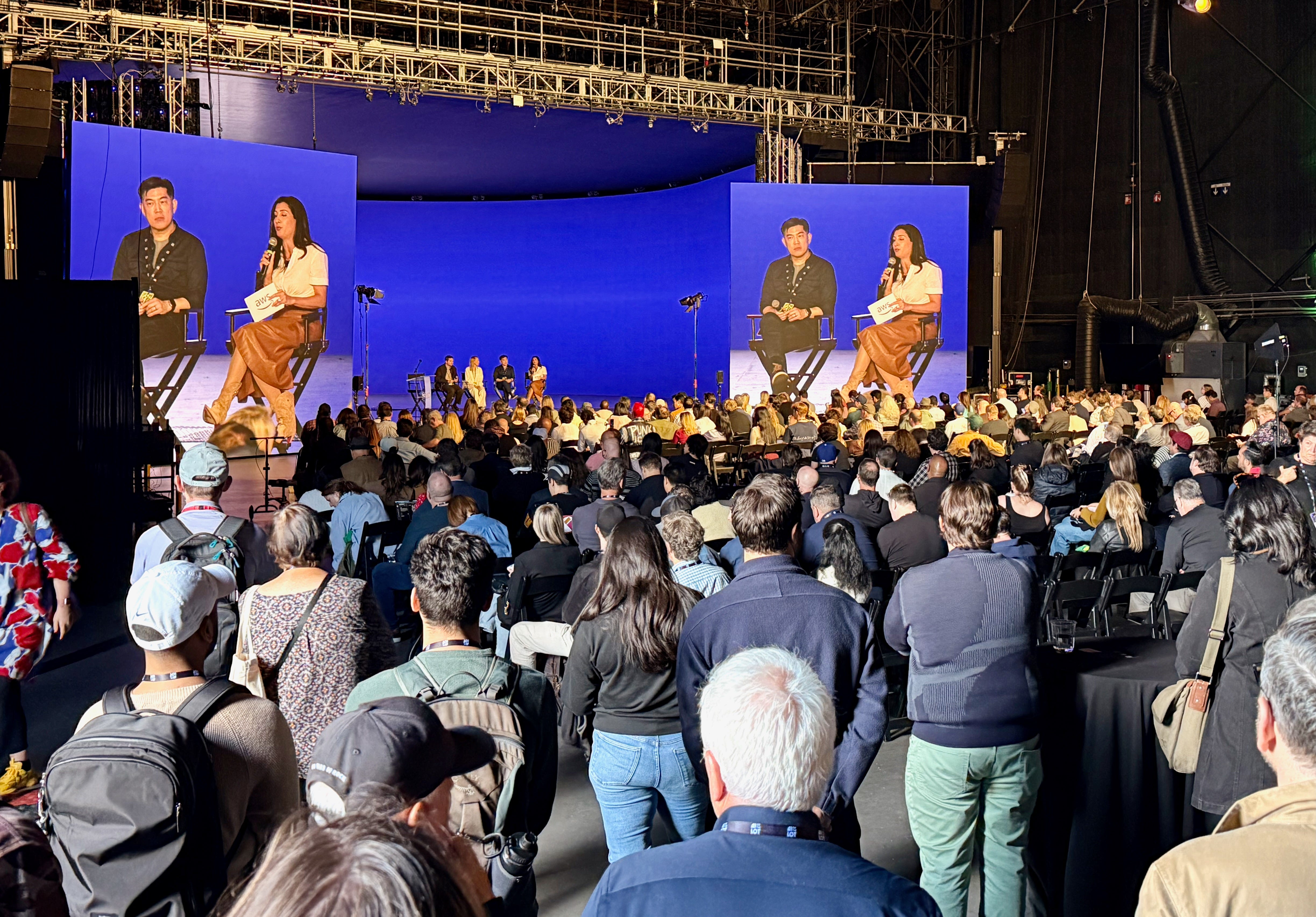
The GenAI Creators’ Fund is Amazon’s funding commitment
Amazon MGM Studios and AWS have jointly established the GenAI Creators’ Fund — a program that offers independent filmmakers, digital creators, and startups both funding and access to Amazon’s professional AI production tools, with the mandate to develop original cinematic content using generative AI throughout the production pipeline.
This fund is not a research project. It has already produced results. Amazon ran a cohort of creators through an eight-week writing period followed by five weeks of production, then greenlit three of the resulting animated short films as full children’s series for Prime Video.
Those three series are Cupcake & Friends from BuzzFeed Studios, Love, Diana Music Hunters from former Nickelodeon president Albie Hecht, and Punky Duck from Jorge R. Gutierrez, the director of The Book of Life and Maya and the Three. The creative talent is legitimate.
Project Nara is Amazon’s proprietary production process pipeline
The production infrastructure underlying the fund is Project Nara, a purpose-built collaborative workspace developed on top of AWS. It integrates directly with tools professional animators and filmmakers already use, including Maya, Nuke, Unreal Engine, and the Adobe Suite. It supports third-party video models including Luma Labs, and apps like fal, alongside proprietary models trained on Amazon MGM Studios’ own IP. It has built-in IP protection and provenance tracking.
Project Nara is currently in closed beta, available exclusively to Amazon MGM Studios and fund participants.
Project Nara is not an AI chatbot with a video plugin. It is an end-to-end production environment built for cinematic work at scale, custom-built to match Amazon MGM’s creative process. Clearly Amazon sees the importance of building a production process that can scale to yield reliable, predictable output.
Cheng’s Philosophy puts Human Storytelling First
What distinguishes this initiative from the usual announcements about new technology is Albert Cheng’s clarity about what AI is and what it is not.
“AI is a tool,” he said during the morning’s opening session. “It cannot make the creative decisions. The creative soul and storytelling comes through a human person making decisions — or a whole team of people.”
His quality standard is equally plain: “If you watch something and cannot tell if it was done by AI, then we accomplished what we set out to do.”
Nimble and Low Budget = Freedom to Take Creative Risks
Cheng invoked Jeff Bezos’s concept of the two-pizza team — a group small enough to be fed by two pizzas — as the organizational model for AI production. Small teams make rapid decisions. “Around AI, things change very fast,” he said. “You need to be nimble.”
He was candid about the industry’s core problem: “Today, the industry is in a weird state where the costs are so high nobody wants to take a risk. That’s how we get a sequel of a sequel of existing IP.” The target of that observation was left tactfully unstated.
His solution is volume. “If you want to make a hit, then you need to take a lot more shots.” AI lowers costs. Lower costs make more attempts possible, and that’s a way to produce more hits.
Amazon Is Quietly Building the Full Ecosystem for Next-Generation Content Creation
AWS’s Samira Bakhtiar, General Manager of Media and Entertainment, offered a concise description of what Amazon has assembled: “Amazon has quietly and methodically built the only end-to-end AI content creation ecosystem in the industry, spanning from infrastructure to creative tools to distribution and funding of creative content.”
That is a vertical stack. AWS provides the infrastructure. Project Nara handles production process and tooling. The Creators’ Fund supplies talent and IP. When appropriate, Amazon’s MGM Studios can produce long-form series or feature films. Prime Video provides distribution to a global audience.
No other studio has all five layers. In candor, today most have none.
Notice that this stack is designed to conform with and maximize Amazon’s unique advantages.
AWS is the industry leader in hosting and serving streaming video. Major global platforms like Netflix, Prime Video, and Max rely on AWS’s robust infrastructure. AWS provides specialized, scalable tools for both Video-on-Demand and Live Streaming.
Amazon Bedrock is a fully managed AWS service that provides a single, unified API to access high-performing foundation models from leading AI companies (such as Anthropic, Meta, Mistral, and Amazon). It allows developers to easily build, scale, and integrate generative AI applications—like chatbots, virtual agents, and content generators—without managing the underlying infrastructure.
To some readers, this may all seem quite obvious. Obvious, perhaps, but not necessarily easy. It’s clear that Amazon has all the pieces, but what is not so clearly evident is how to put these pieces together into a unified stack that will support their internal AI studio, nor how to align incentives. That is a political and business strategy decision as much as an infrastructure decision.
There is a lot of managerial finesse behind these announcements.
Personally, I am deeply impressed that this degree of coordination and integration got done so quickly. It takes extraordinary diplomatic skill to persuade five or six different organizations, each with their own P&L and growth objectives, to align on a common set of business goals in support a brand new venture.
Trust me. At some traditional film studios, this kind of cooperation would be unimaginable.
So far, this article has emphasized animation at Amazon’s new AI studio.
But what about AI for live action films and TV shows produced by Amazon’s MGM Studios? Cheng has much to say about that subject, too.
He went into detail about the use of AI for pre-visualization for every type of movie or show. To me, this is one of the most important uses of AI in cinema, but it is often overlooked because so much attention is directed to generating shots and scenes.
Pre-viz allows filmmakers to see the film before they shoot. This is a normal step in the process for any film project that relies on special effects. But with generative AI, pre-viz can be done faster and much cheaper. And again, the process is iterative, so the director, cinematographer and effects supervisor can experiment quickly and cheaply with different looks and styles until they arrive at a look that fits the story world and conveys their creative vision.
Even producers who have absolutely no intention of using AI during principal photography can enjoy enormous time and cost benefits by using AI to pre-visualize scenes before starting principal photography. That will lead to better decisions made before the crew sets foot on the set.
Cheng also spoke about rapid compositing AI-generated imagery into live action scenes shot against green. “By the end of the shoot day,” Cheng said, “you can see the fully composited shot. Then the director and creative team can determine if we got what we wanted in today’s shoot.” That feedback loop used to take weeks. Now it can happen on site, during the shoot day.
He also described a hybrid approach — combining green screen and LED volume stages with AI-generated backgrounds and props — as fundamentally changing the economics of production. Cheng cited Jon Erwin, one of the filmmakers who produces series with MGM and Amazon Prime. Erwin has developed an entirely new real-time production methodology that combines live performance capture with AI-generated environments.
The key point to takeaway here is that Cheng is building up internal resource of expertise that is made available to the traditional filmmakers and producers hired by MGM Studios. This is artful diplomacy. His internal team of experts will win converts to the cause, one production at a time. When those directors and producers move on to new projects, they will carry the message about what they’ve learned at Amazon.
Cheng is building an army of true believers who will evangelize best practices across the entire industry.
The Case for Making Los Angeles the World Center of AI Filmmaking
Cheng made another point that I hope will resonate in this city. He wants to bring production back to Los Angeles, and he believes that generative AI can help.
AI-assisted production with smaller crews, he argues, is the right way to do this. Too many jurisdictions elsewhere compete like mad to lure the big-budget productions with tax incentives.
Cheng is pushing for AI-specific tax incentives in Los Angeles to accelerate the shift back to local production. He wants to turn LA into the center of AI filmmaking worldwide.
Whether or not the politics cooperate, the industrial logic holds. Smaller crews, faster cycles, and lower breakeven costs, will lead to more shows in production, more crews with high AI skills, and better local infrastructure. It may restore a virtuous cycle that was broken by the pandemic and the Guild strikes of 2023.
That’s a version of Hollywood that can survive runaway production.
Plus A Warning That Cheng Didn’t Have to Give
The most unexpected moment in Cheng’s remarks was a warning. “AI can be addictive”, he told the audience. “It will take over your process if you allow it.”
His standing instruction to his team is: “Ask yourself, is AI governing my process, or am I in charge of it? Keep asking.”
That is not the kind of thing you say at a launch event unless you have actually worked with the technology long enough to understand how and when it fails. It is also, I think, an indication that this initiative has a real chance of working because the leadership has a solid understanding of the pitfalls.
In closing, it has been an exhilarating month in Los Angeles for generative AI in film and television. As the Magic Eightball says, “All signs point to Yes".”
Coming up: I am preparing a new series of articles about the future of companies in the context of agentic AI, and the implications for the human workforce. For these articles, I will expand on the work that I did recently for Deloitte’s Workforce Innovation Seminar and on my experience in financing and launching two new content publishing ventures built with agentic AI at the core.
In July I will present the closing keynote speech at the KPMG Innovation and Tech Summit on the topic of AI and the future of jobs. I hope to meet you there in person.
So many great points and I must say, your article inspired me on marketing a tech solution, I am working on!